How to Style a Statement Coat – Statement Jacket Outfit Ideas
Styling a statement coat isn’t about piling on more layers—it’s about using one smart rule that instantly makes your outfit look intentional: the Supporting Cast Rule. This winter fashion styling principle keeps your statement jacket as the hero piece while everything else plays it cool, clean, and expensive-looking.
In this guide on how to style a statement coat, you’ll learn simple long coat styling tricks that work for bold prints, structured silhouettes, and even a colourful coat that needs the right balance. Think sleek base layers, neutral accessories, and footwear that supports the look—so your coat stays the main character and your outfit never feels “too much.” If layering ever makes you feel bulky, bookmark Stylish Layering Tips For Fall for easy ways to stay warm without losing your shape.
Here is a guide on how to style these high-impact coats for maximum effect:
1. Master the Supporting Cast Rule:
The statement coat should always be the first piece chosen when building an ensemble, not the last. Think of the inner layers—your top, trousers, and accessories—as a seamless foundation for long coat styling:
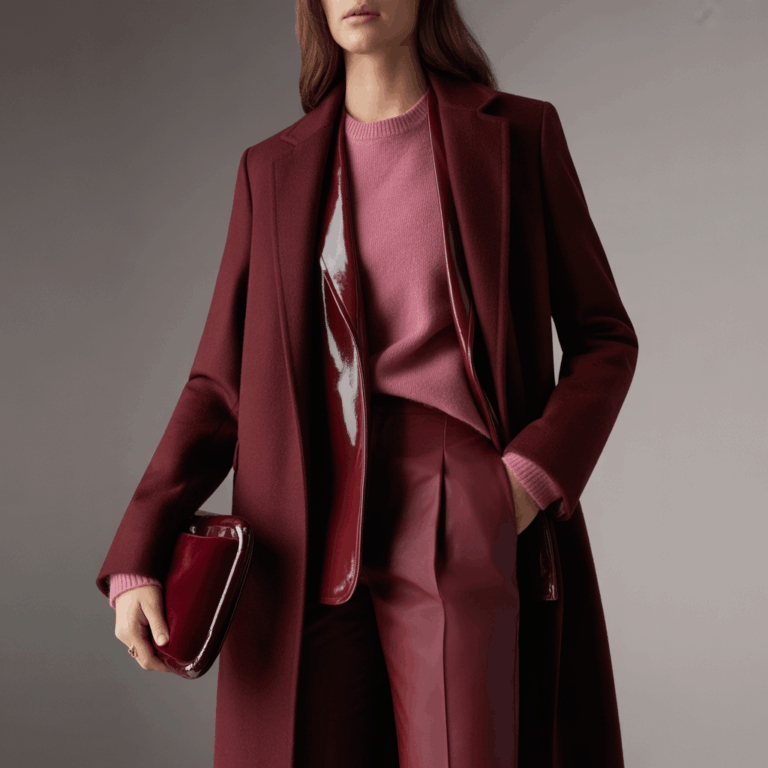
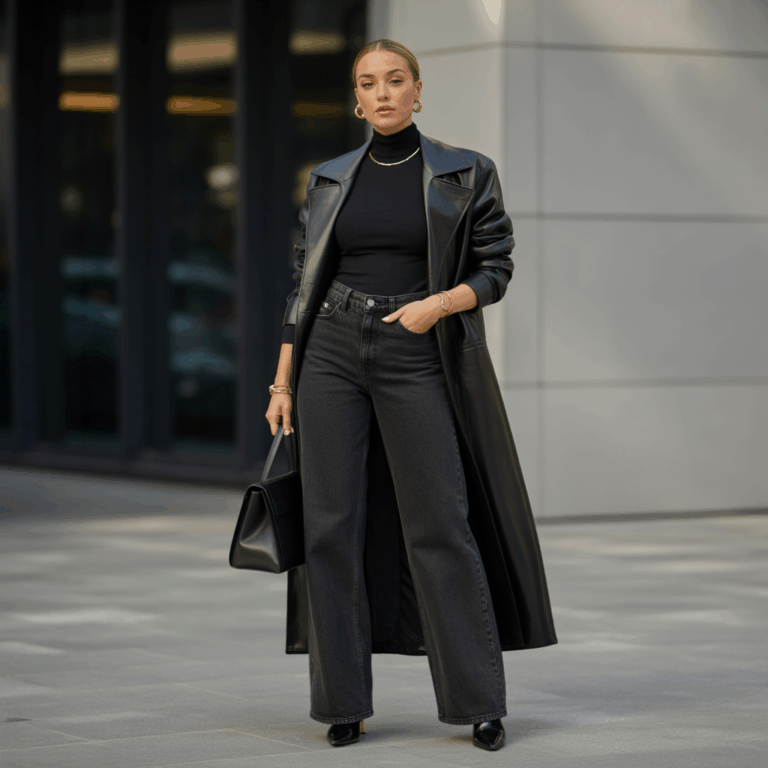
- Streamline the Base: The layers beneath the coat should be simple and fitted. Opt for slim knits, fitted turtlenecks , or sleek trousers that elongate the leg. This ensures the coat’s tailored shape remains intact and prevents the look from becoming bulky.
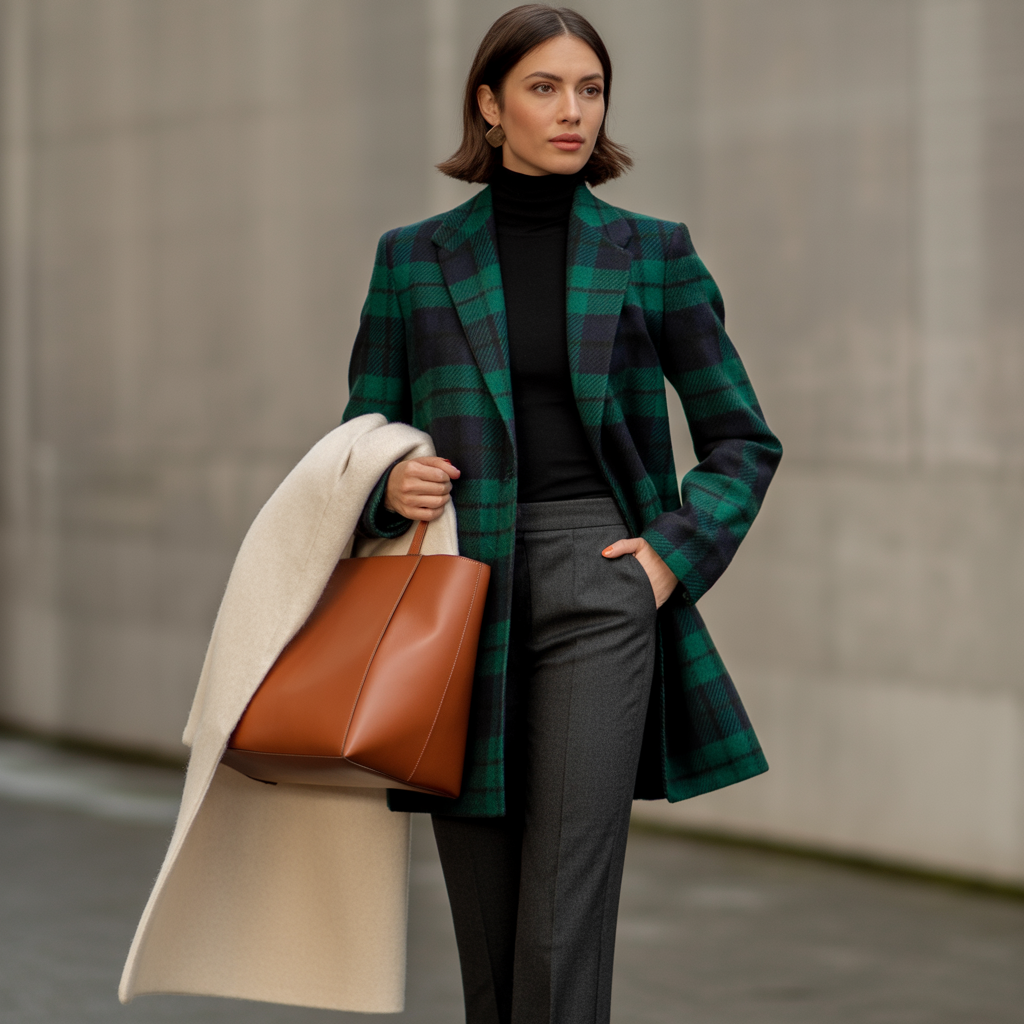
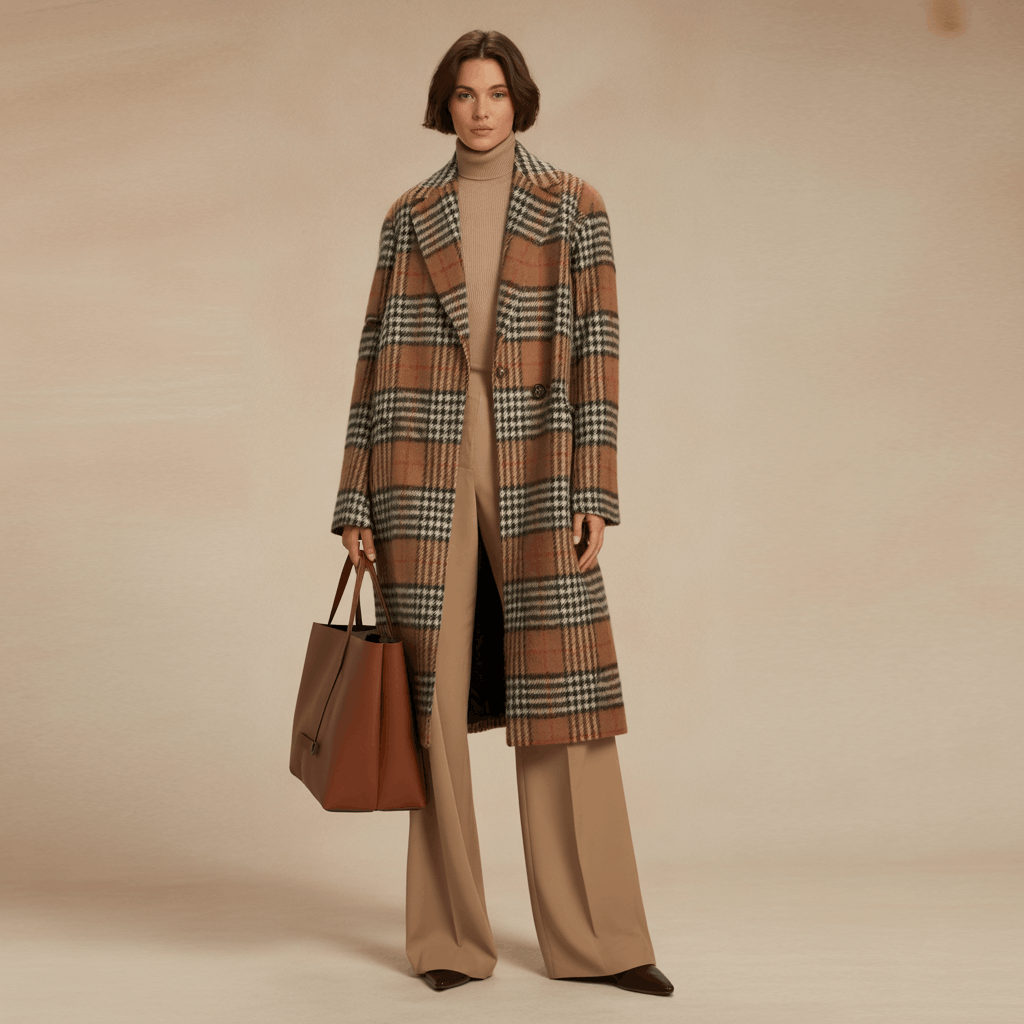
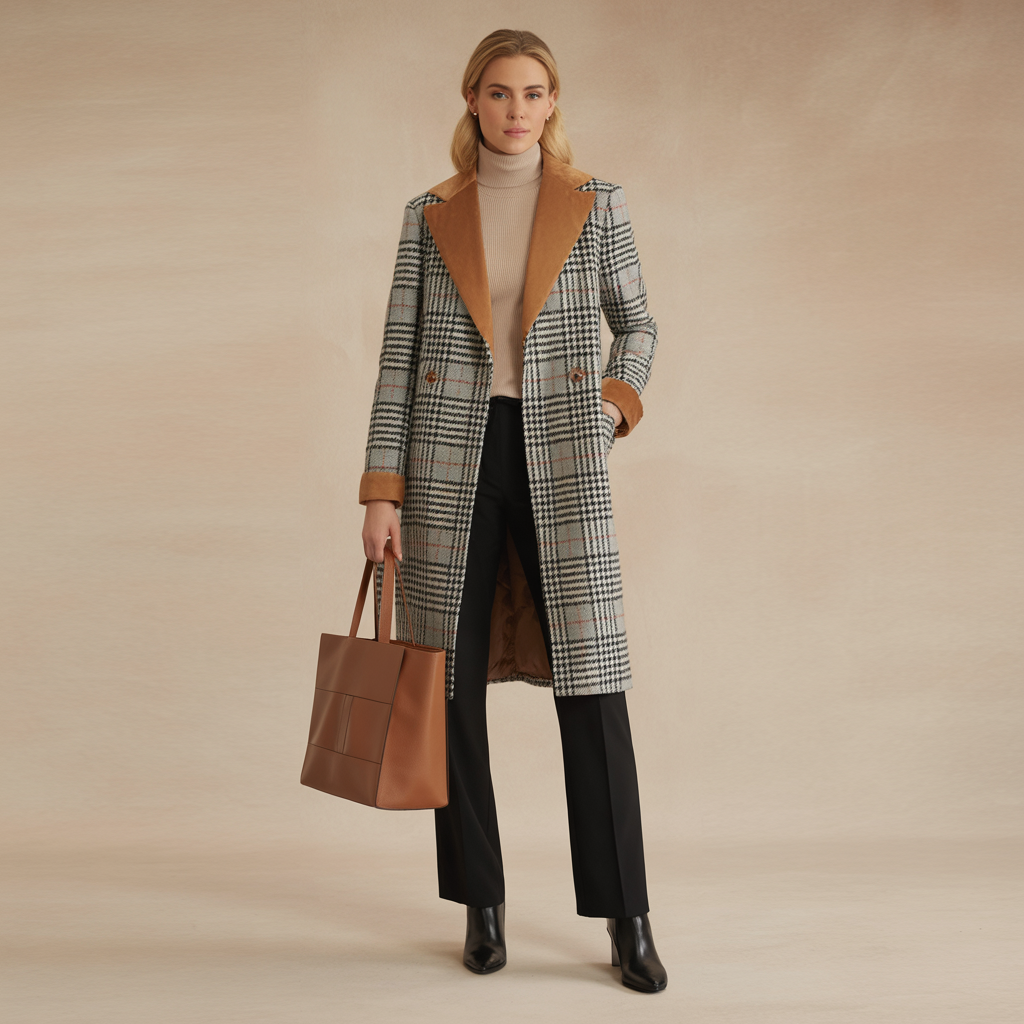
- Coordinate Accessories: Accessories should align rather than compete. Against a boldly patterned coat (like a check or tartan), choose clean, monochromatic items, such as a leather tote or a solid neutral scarf. If the coat is simple, accessories can introduce a slight texture or color contrast (e.g., a neutral scarf tucked into a suede lapel ).
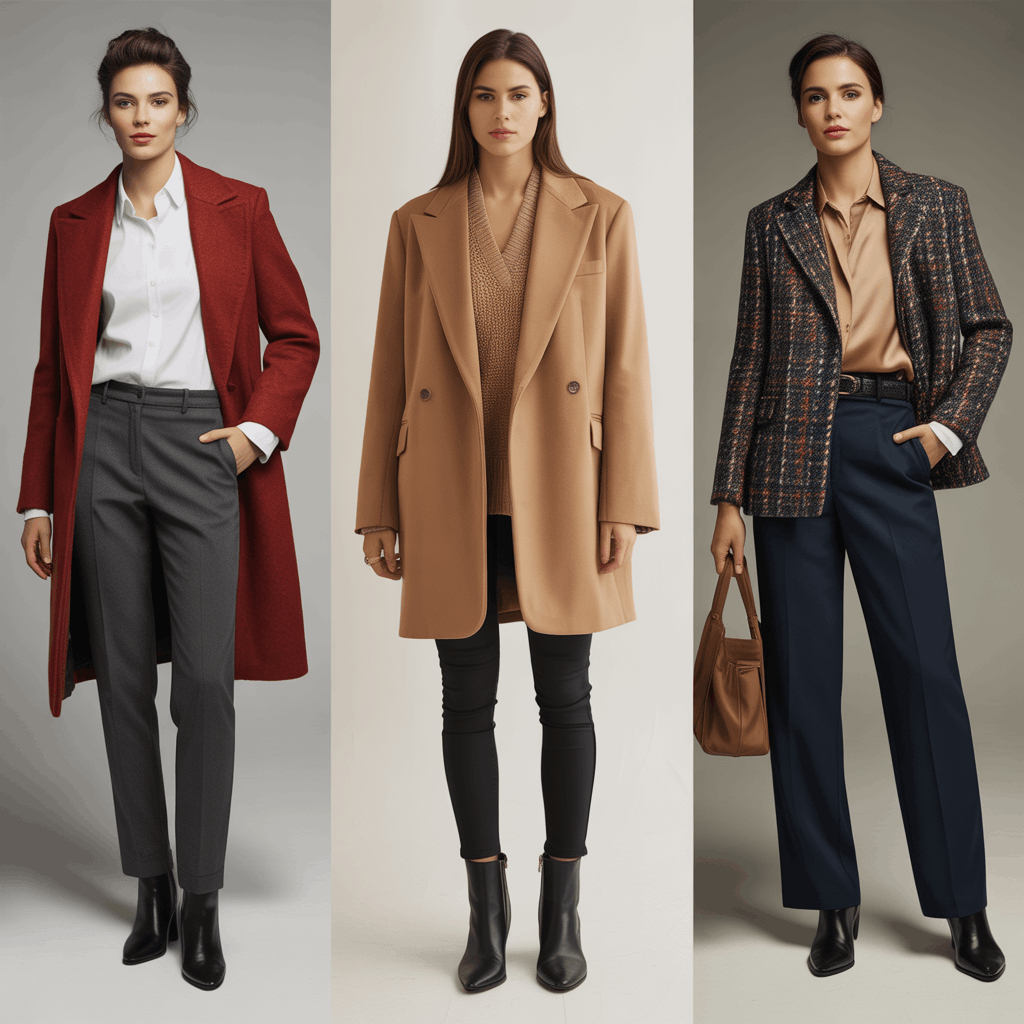
2. Strategic Contrast Styling (Balance Your Statement Coat)
The key to elevating your outerwear lies in balance—combining visual drama with understated essentials. Whether you prefer bold color, structured contours, or textured fabric, contrast creates cohesion and keeps your statement jacket looking intentional (not chaotic).
Coat Feature | Styling Strategy | Example Combination |
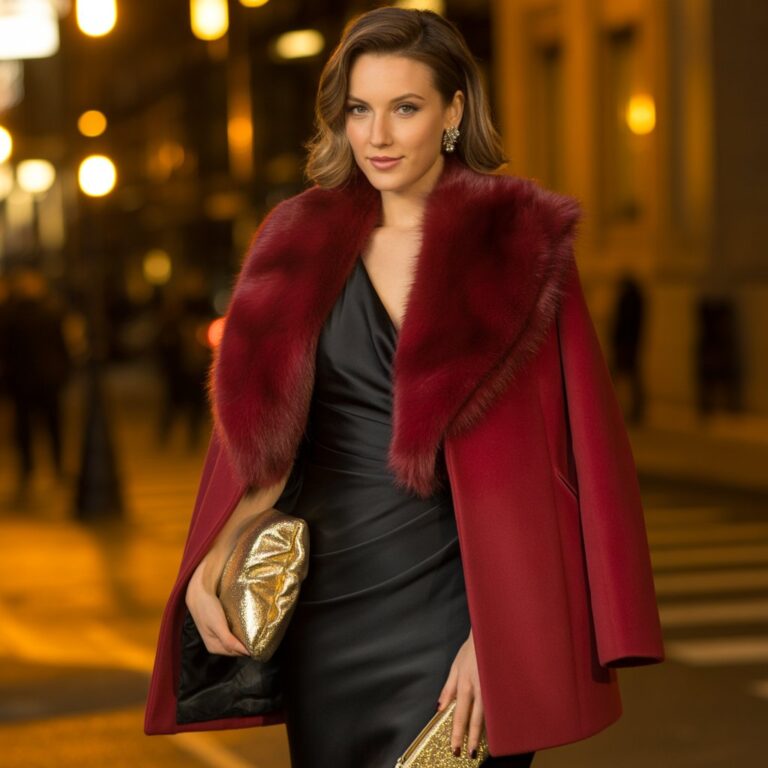
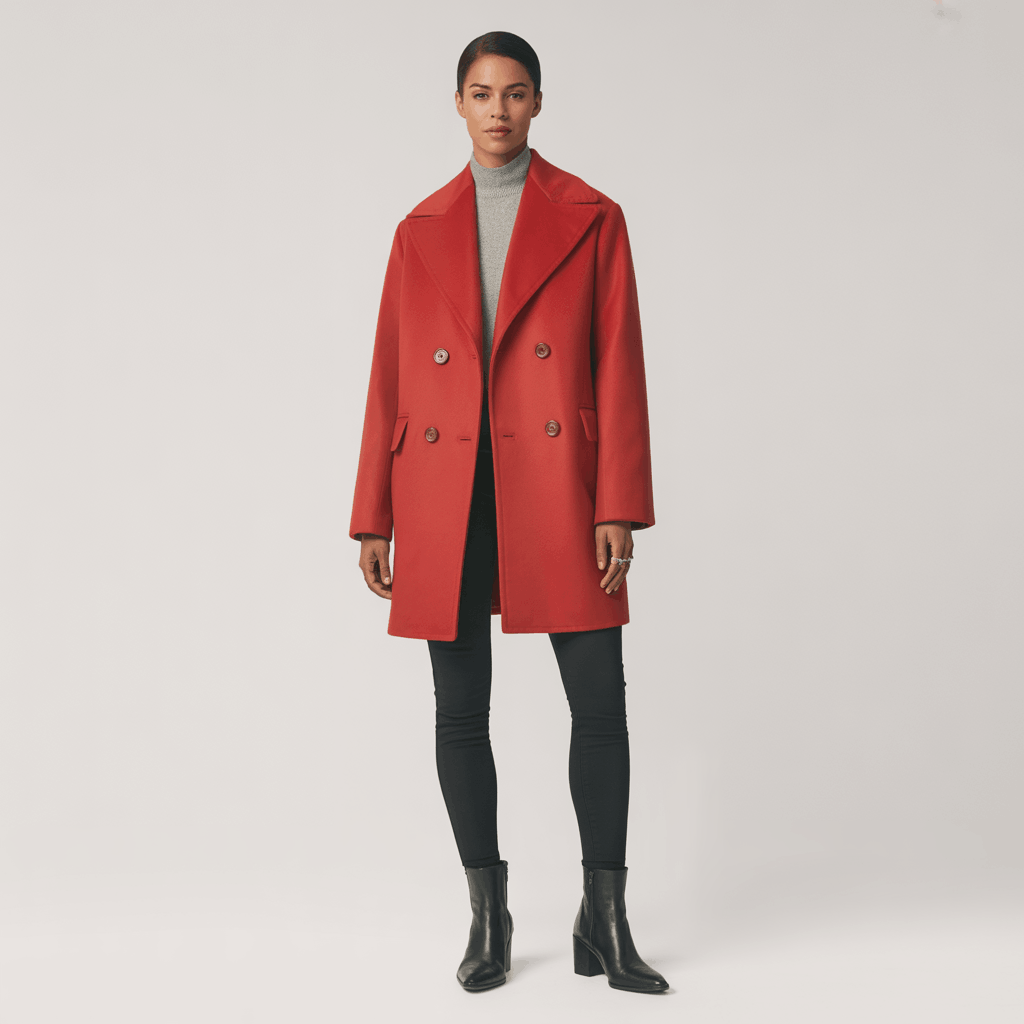
Bold Color (e.g., Mars Red ) | Pair with grounding neutrals like crisp white, black, or charcoal grey to let the color steal the spotlight . | A red coat worn over fitted black skinny jeans and a white shirt. |
Oversized Silhouette | Balance the volume on top by keeping the bottoms sleek and fitted (like the proportions of a fitted turtleneck to slim trousers). | An oversized wool coat layered over slim-fit pants and black leather ankle boots. |
Rough Texture (e.g., Tweed, Wool) | Introduce smooth, luxurious textures underneath to create visual interest. | Pair a tweed coat with a fine-gauge knit, silk-blend shirts, or soft cashmere sweaters. |
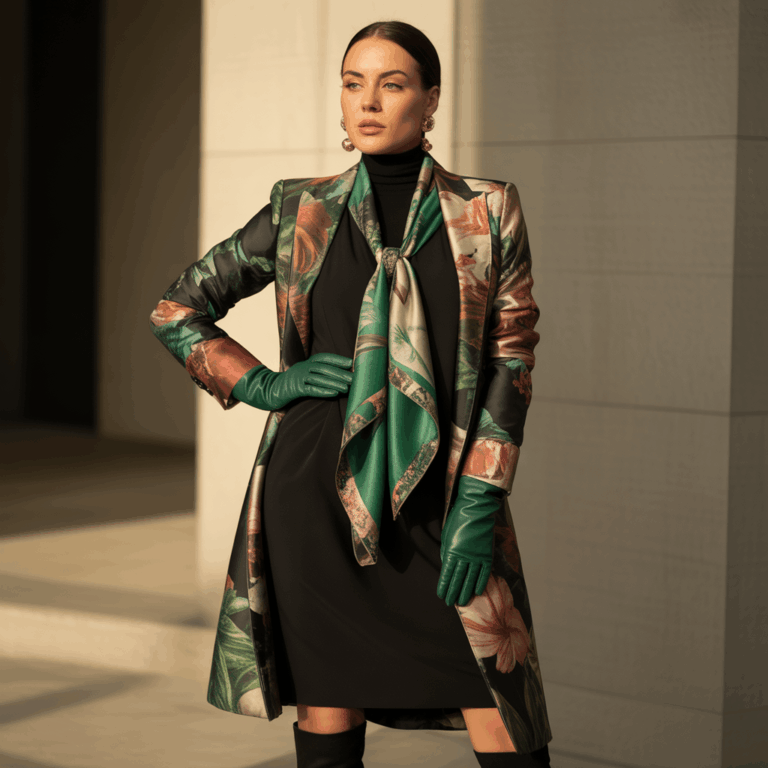
High-Impact Print (e.g., Tapestry, Geometric) | Keep the rest of the outfit solid and neutral (black, navy, or dark denim) to prevent the ensemble from feeling chaotic. | A tapestry jacket paired with dark denim and leather boots. |
3. Footwear and Hemline Harmony
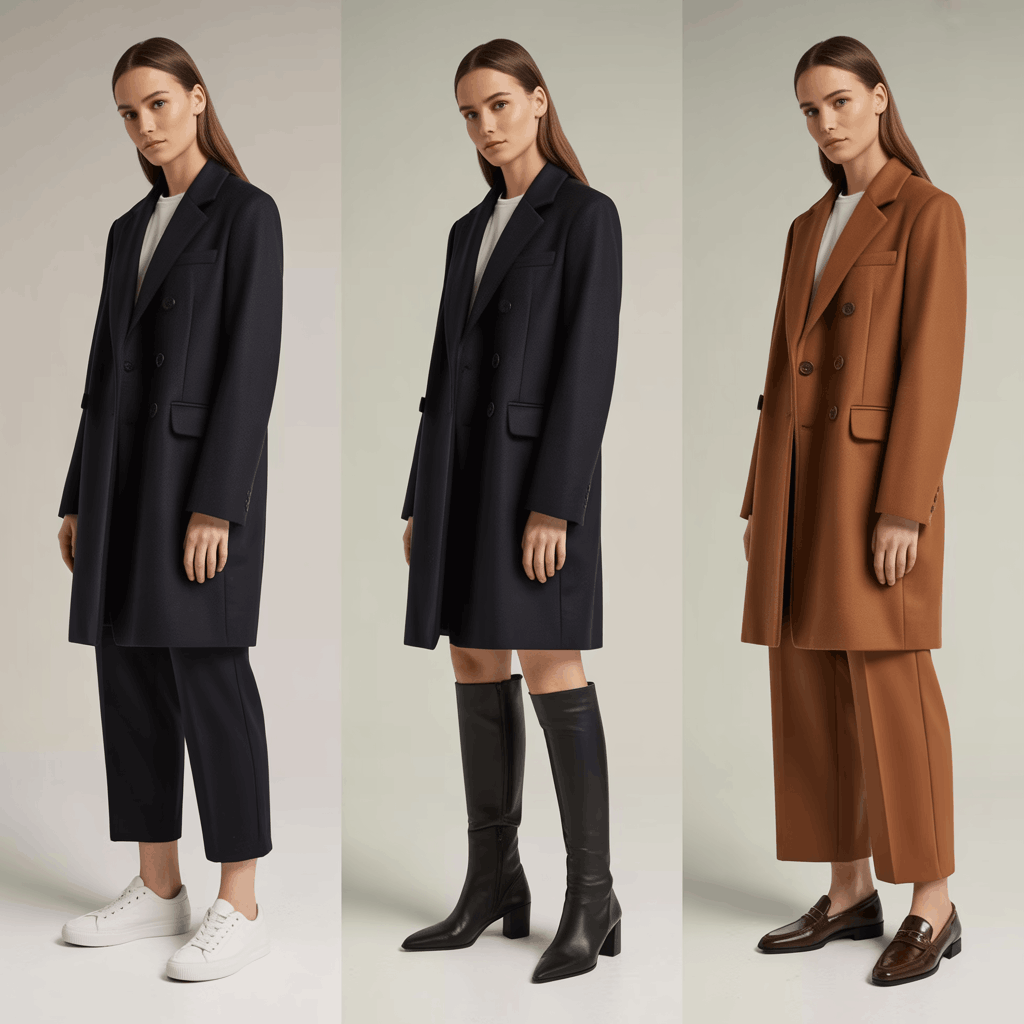
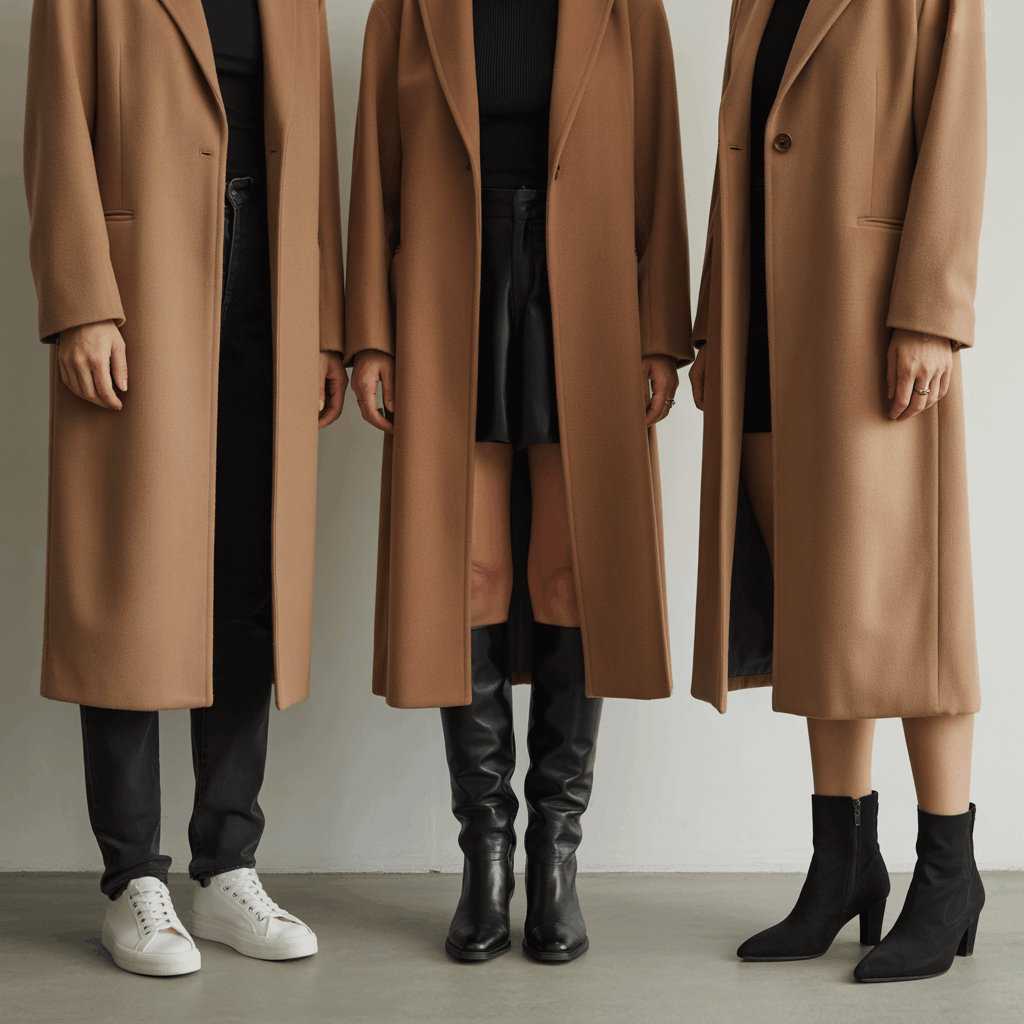
Footwear plays a crucial role in finishing a statement coat outfit because shoes can either support the coat’s impact—or compete with it.
- Elevating the Casual: To make a bold coat feel effortless for everyday wear, pair it with simple footwear like white canvas low-top sneakers.
- Polishing the Look: For a refined finish, choose sleek options like knee-high boots, black suede ankle boots, or tailored loafers. These styles keep the vertical line clean and help the outfit look expensive.
- Length Coordination: Make sure your boots—especially knee-high styles—work with the coat’s hemline so the coat stays the focal point, not the footwear.
By approaching a statement coat as the complete outfit, you ensure that even simple pairings are elevated to a high-impact, intentional look.
The Fit Factor: Why Sizing Matters More in Statement Coats
Fit is the foundation of luxury outerwear — even the most expensive piece can lose its impact with poor tailoring
Fit is the foundation of luxury outerwear—because even the most expensive coat can lose its impact with poor tailoring. Fit always matters, but with a statement coat, it becomes non-negotiable. Since this piece carries so much visual command, small issues like drooping shoulders, tight sleeves, or an awkward length show up instantly. When statement coats women wear look polished and powerful, it usually comes down to one thing: precision fit.
Below are the most common sizing and proportion mistakes people make when buying high-impact outerwear—and exactly how to avoid them so your coat delivers on its sophisticated promise.
1. The Shoulders: The Foundation of Authority
The Issue: Drooping or Restricted Shoulders
Shoulders are the architectural starting point of any coat. If the shoulder seam sits too far past your natural shoulder line, the coat will look sloppy and unintentionally oversized (unless it’s designed as a tailored drop-shoulder). On the other hand, if the coat feels tight across the upper back, it restricts movement—and that always signals a poor fit.
How to Avoid It: Whether the coat is structured or relaxed, the shoulder seams should align with your natural shape. When trying it on, wear the layers you plan to style underneath (like a sweater or blazer) and lift your arms. If the coat pulls hard across your back, size up.
2. The Sleeve Length: The Sign of Sloppiness
The Issue: Sleeves That Are Too Long or Too Short Sleeves that run too long make the coat look heavy and sloppy because they hide your hands and break the clean line of the silhouette. Sleeves that sit too short can expose inner layers in an unpolished way and limit comfortable movement.
How to Avoid It: Aim for sleeves that fall just past your wrist bone—usually about halfway down the hand. If you’ll wear thick gloves or layered knits, test the coat with those pieces so the cuffs don’t ride up or feel tight.
3. The Waistline: Losing the Figure
The Issue: The Lost Waist or a Misplaced Belt
In belted or tailored coats, waist definition keeps the silhouette sleek and stops the coat from overwhelming your frame. If the belt sits too high or too low—or the darts and seams hit the wrong spot—the coat can lose its structure and end up looking shapeless.
How to Avoid It
For belted styles, make sure the belt lands at your natural waist. If you’re petite or tall, check that the tailoring lines (seams or darts) sit where they should to define your shape instead of hiding it. If the coat isn’t belted, look for a cut that gently nips in at the waist to create subtle definition.
4. The Length: Proportional Errors
The Issue: Incorrect Length for Your Frame
A coat’s length needs to feel intentional. The wrong length can visually shorten you or make the coat feel bulky and awkward, which kills the “statement” effect. For example, a full-length coat can overwhelm a petite frame if it swallows your proportions.
How to Avoid It
Match the length to your height and your real-life wardrobe. Petite frames often look best in knee-length coats because they give coverage without taking over. Taller frames can handle full-length styles beautifully. Always check that the hemline works with the shoes you wear most—ankle boots and knee-high boots create very different proportions.
5. Bulky Layering: Compromising the Silhouette
The Issue: Bulk Underneath a Structured Coat: A common mistake is wearing thick, chunky knits—or piling on heavy layers—under a coat designed for precision fit (like tweed or tightly woven wool). This distorts the silhouette, ruins the clean outline, and makes the coat feel tight and uncomfortable.
How to Avoid It: Use the Supporting Cast Rule for layering. If the coat is structured, choose fine-gauge but warm layers like cashmere or silk-blend shirts underneath. If you want to wear a chunky knit, pick an intentionally oversized coat that can handle the volume, or style the knit as an outer layer over a lighter jacket instead.
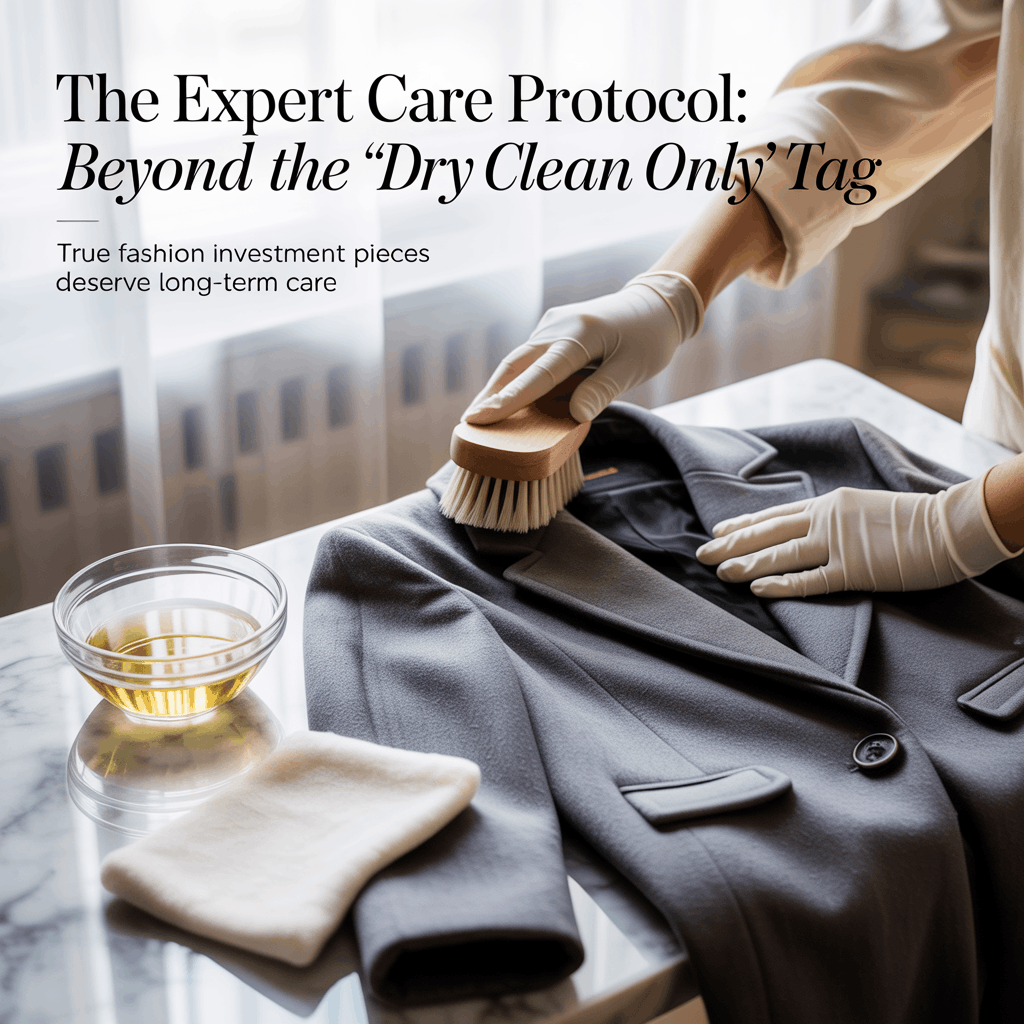
The Expert Care Protocol: Beyond the “Dry Clean Only” Tag
True fashion investment pieces deserve long-term care. From premium wool coats to leather trench styles, maintaining the integrity of your outerwear ensures longevity and continued elegance—especially with a statement coat.
1. Daily and Routine Care Rituals
Consistent, light care after each wear is the most effective way to prevent damage and keep natural fibers in top condition.
Care Component | Natural Fibers (Wool, Shearling) | General Outerwear (Puffer Coat, Trench) | Expert Tip |
Brushing | Lightly brush using a soft brush or cloth after each wear to remove debris and align fibers, deterring matting, especially in shearling. | Air the coat out to remove absorbed odors before putting it back in the closet. | Immediate routine care is more effective than intermittent deep cleaning for fiber integrity. |
Spot Cleaning | Use the “blot, not rub” rule immediately on stains. Rubbing pushes the stain deeper into delicate fibers. | Use a clean, damp cloth and a small amount of mild, non-biological detergent diluted with water for tough spots. | Avoid all harsh commercial stain removers, especially those containing chlorine or oxygen bleach, as they can cause irreparable damage to delicate fabrics. |
Drying Protocol | Air dry only (do not use direct heat or sunlight) for natural fibers, as it preserves the material’s elasticity. Heavy wool coats can take up to 24 hours to dry completely. | Hang up raincoats and hard shells to air dry completely; tumble dryers can damage protective coatings. |
2. Strategic Long-Term Storage
Proper seasonal storage is critical for preventing structural collapse, moth damage, and moisture issues.
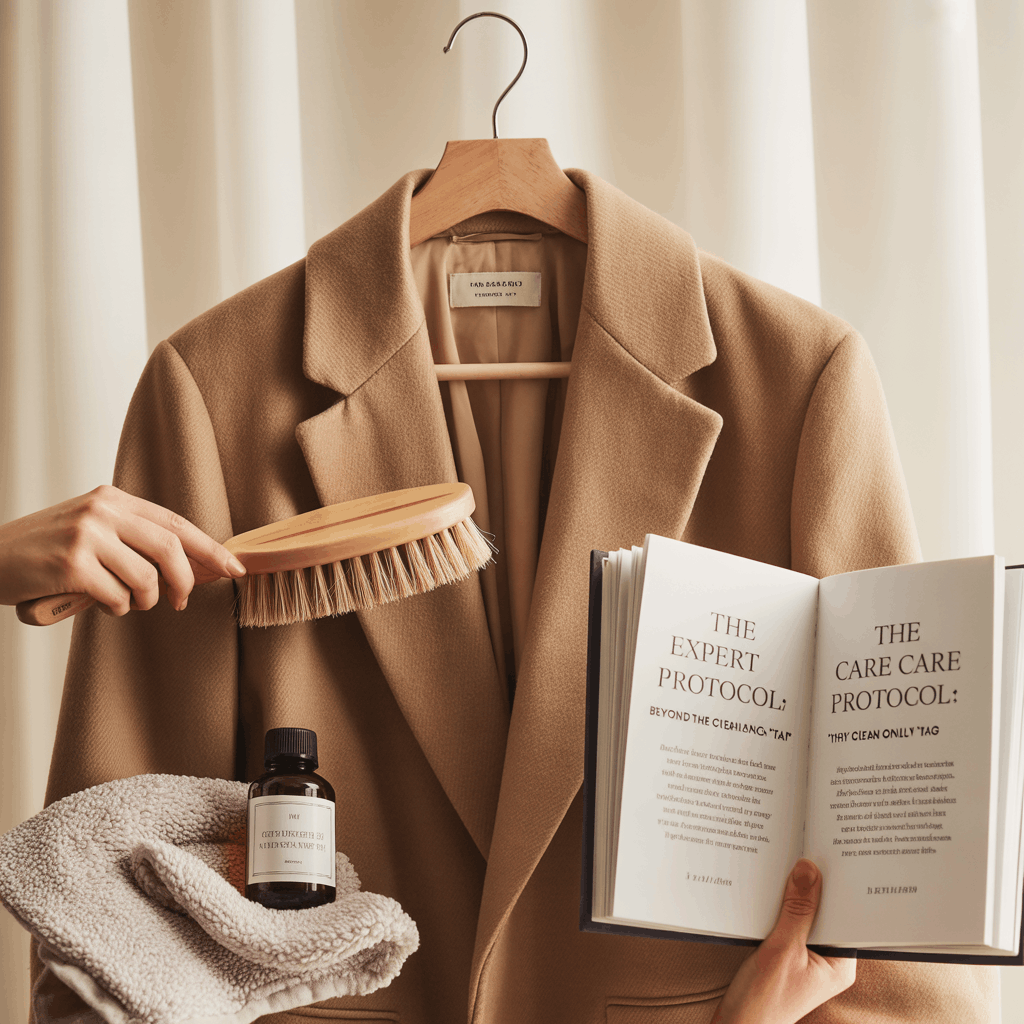
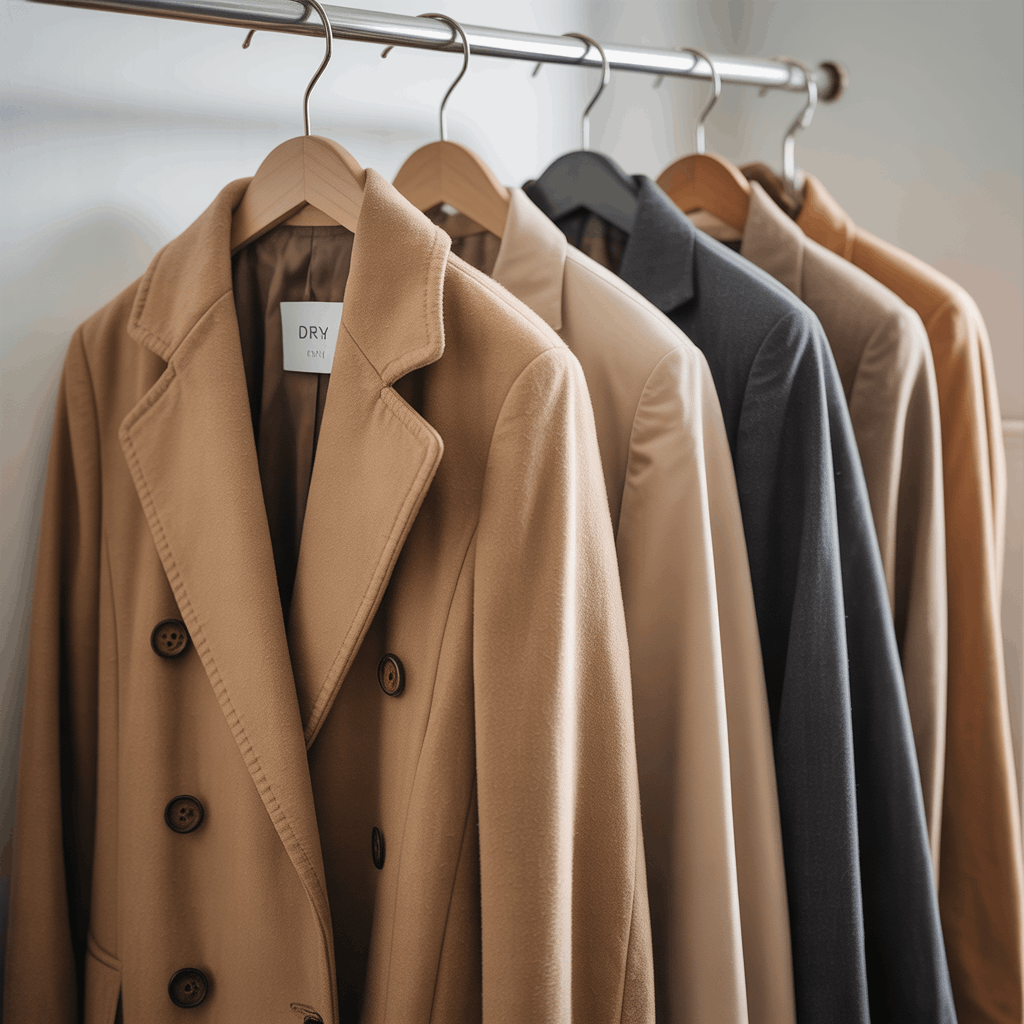
- The Hanger Mandate: Avoid flimsy wire hangers completely. The weight of an investment coat can stretch them out and ruin shoulder structure. Use sturdy hangers with broad, padded shoulders—or wide cedar hangers—to support the coat and maintain its intended contour.
- Breathable Protection: Store outerwear in breathable cotton or canvas garment bags to protect it from dust and moisture. Avoid plastic dry cleaner bags, which trap humidity, cause odors, and increase the risk of mildew and deep creases.
- Pest Control: Cedar blocks or sachets help repel moths that damage wool. Place them nearby, but don’t let them touch the fabric directly.
- Pre-Storage Cleanse: Always clean your coat before putting it away for the season. Dirt, salt, and grime attract pests and can cause long-term damage. For specialized materials like shearling, professional cleaning matters even more before long-term storage.
Editor’s Tip: One Coat, One Story
This is the ultimate rule for styling high-impact outerwear: your statement coat is the star, and your entire outfit should act like a clean, refined backdrop. When you follow this “One Story” approach, you avoid outfit chaos and make even bold pieces look polished.
The “One Story” Mandate
Because a hero coat carries so much visual power, you need to prevent “outfit arguments.” Keep every choice quiet, intentional, and simple so people remember the coat’s silhouette, texture, and presence—not a messy mix of trends.
- No Competing Prints: If your coat is plaid, tapestry, or geometric, keep the rest of the outfit solid and neutral (black, navy, camel). This keeps your statement jacket looking elevated instead of overwhelming.
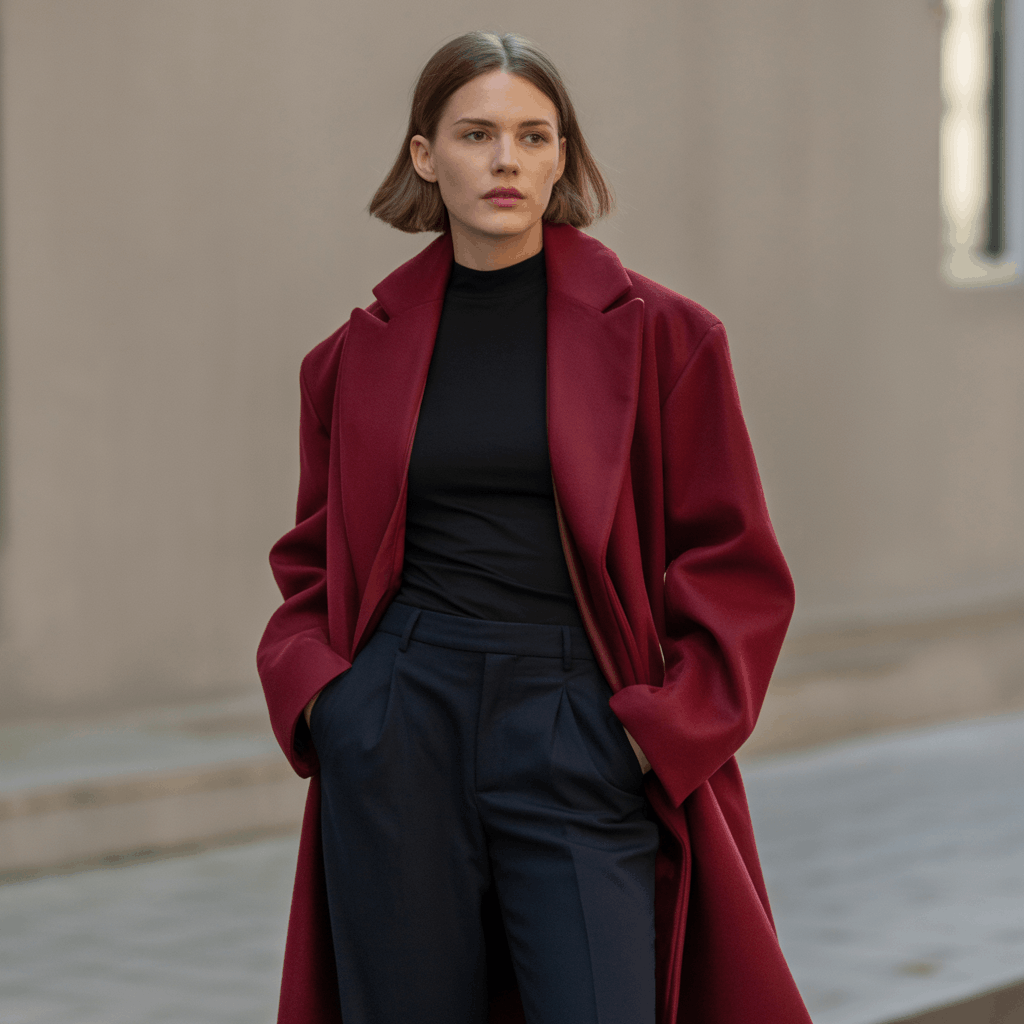
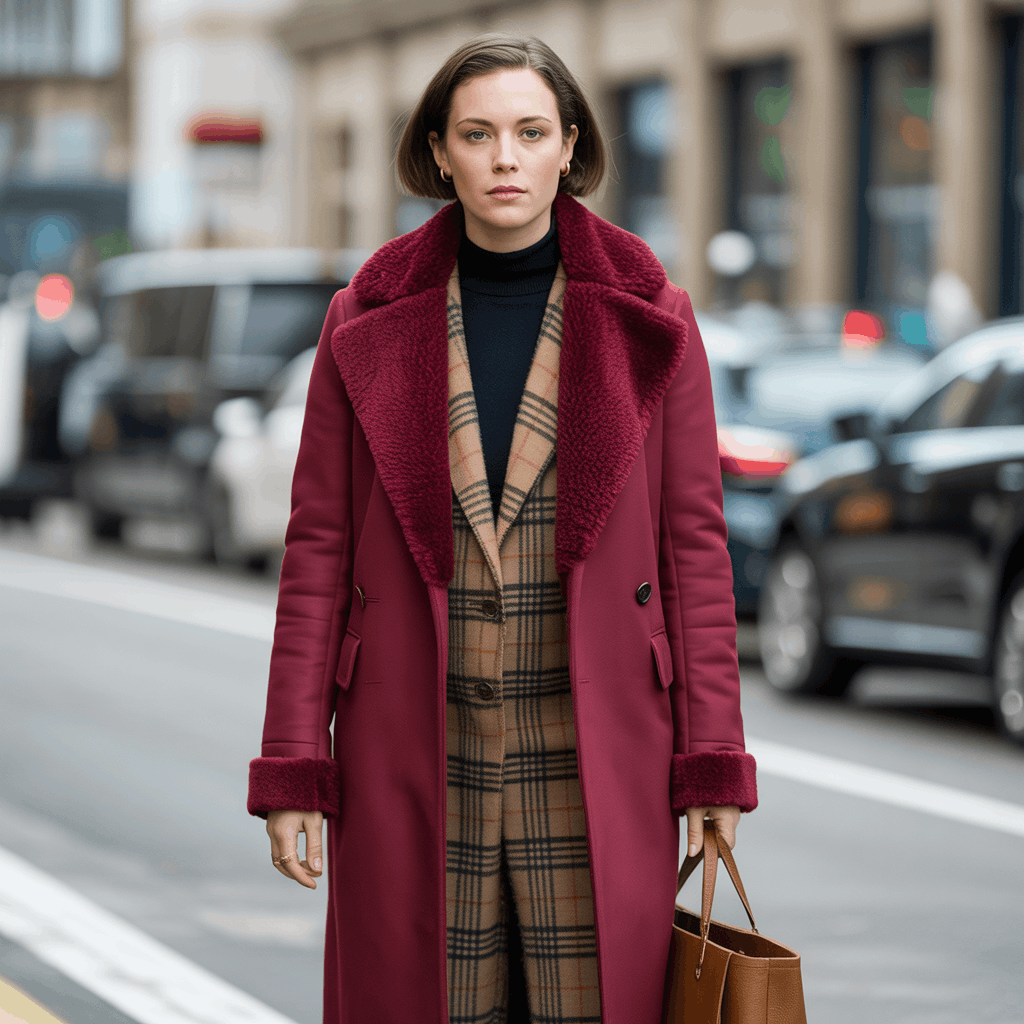
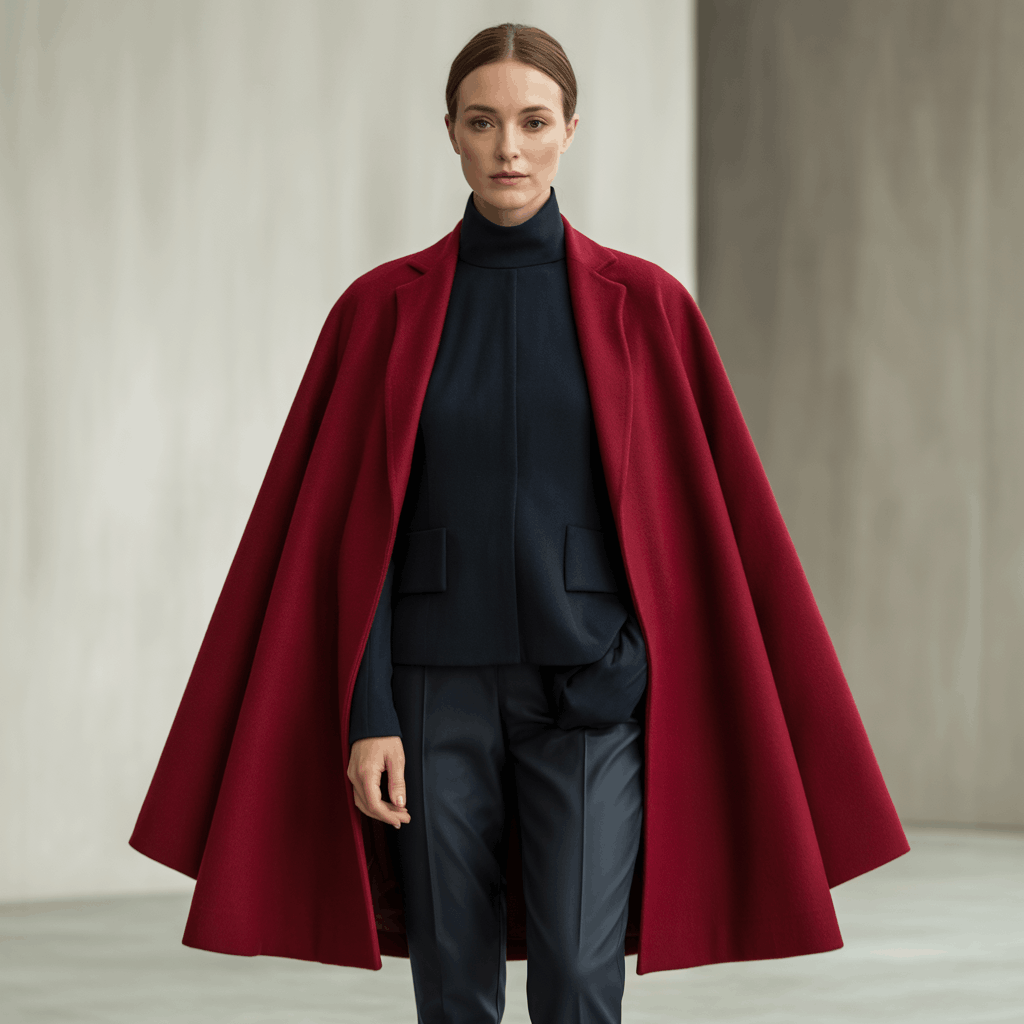
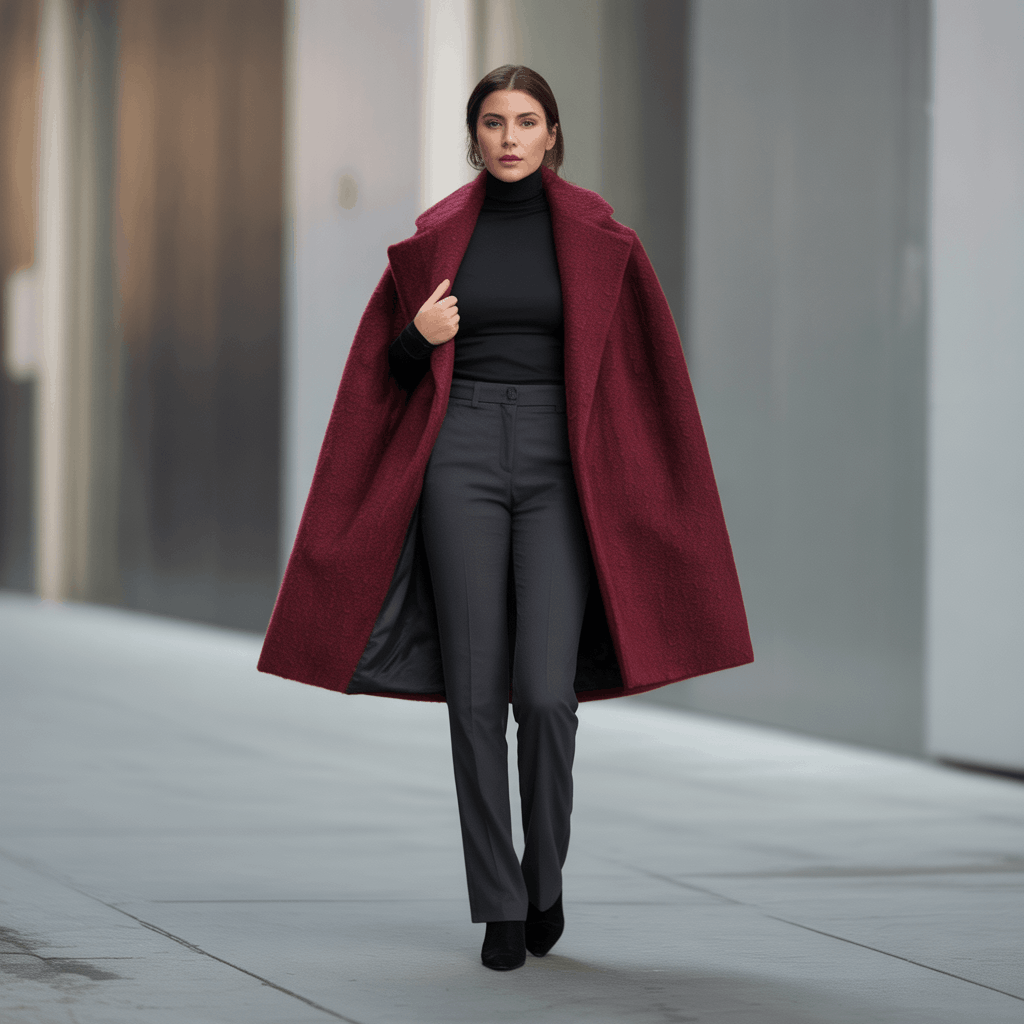
- The Power of Simplicity: If the coat has a dramatic shape (swing, cocoon, oversized), let that volume speak. Stick to sleek layers underneath—fitted turtlenecks and slim trousers—so the silhouette stays sharp.
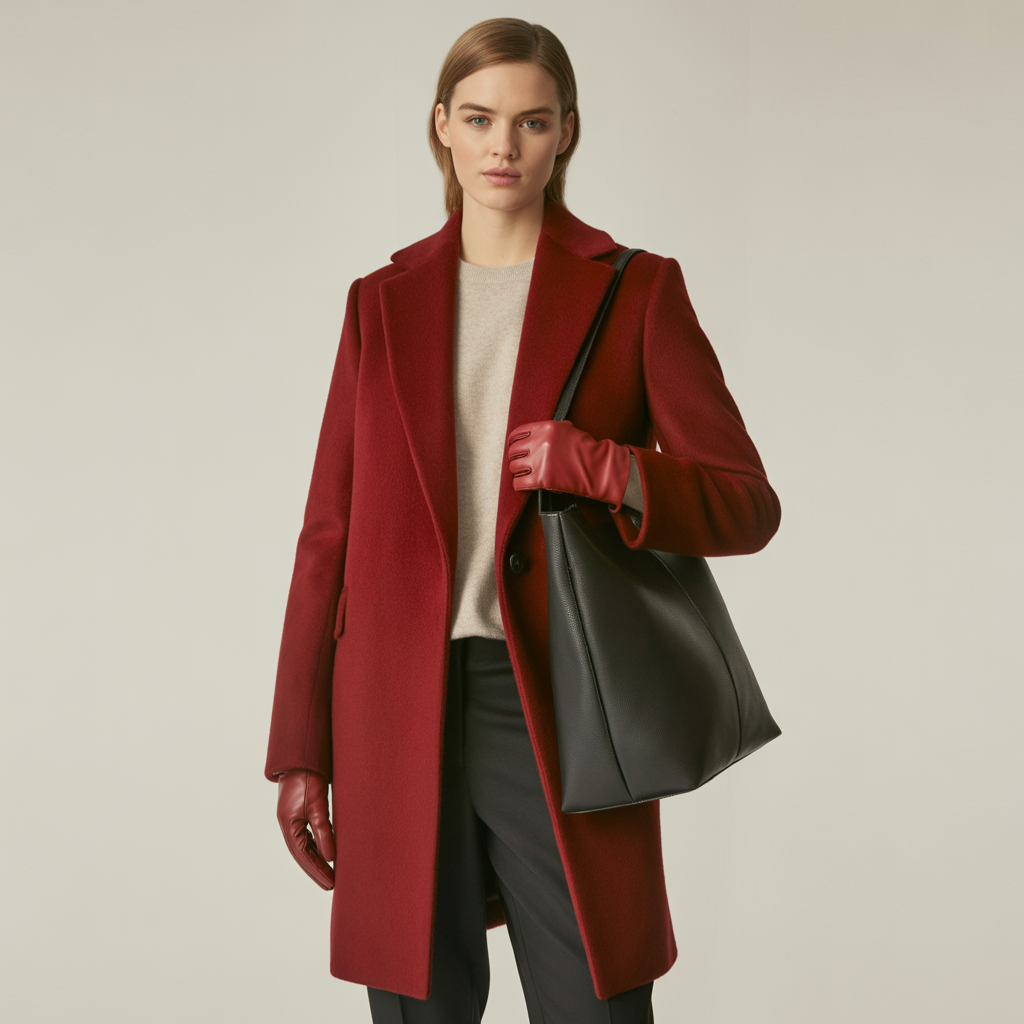
- Accessories are Punctuation: Use minimal accessories as accents, not focal points. A sleek leather tote, a simple scarf, or one textured piece adds polish without stealing attention.
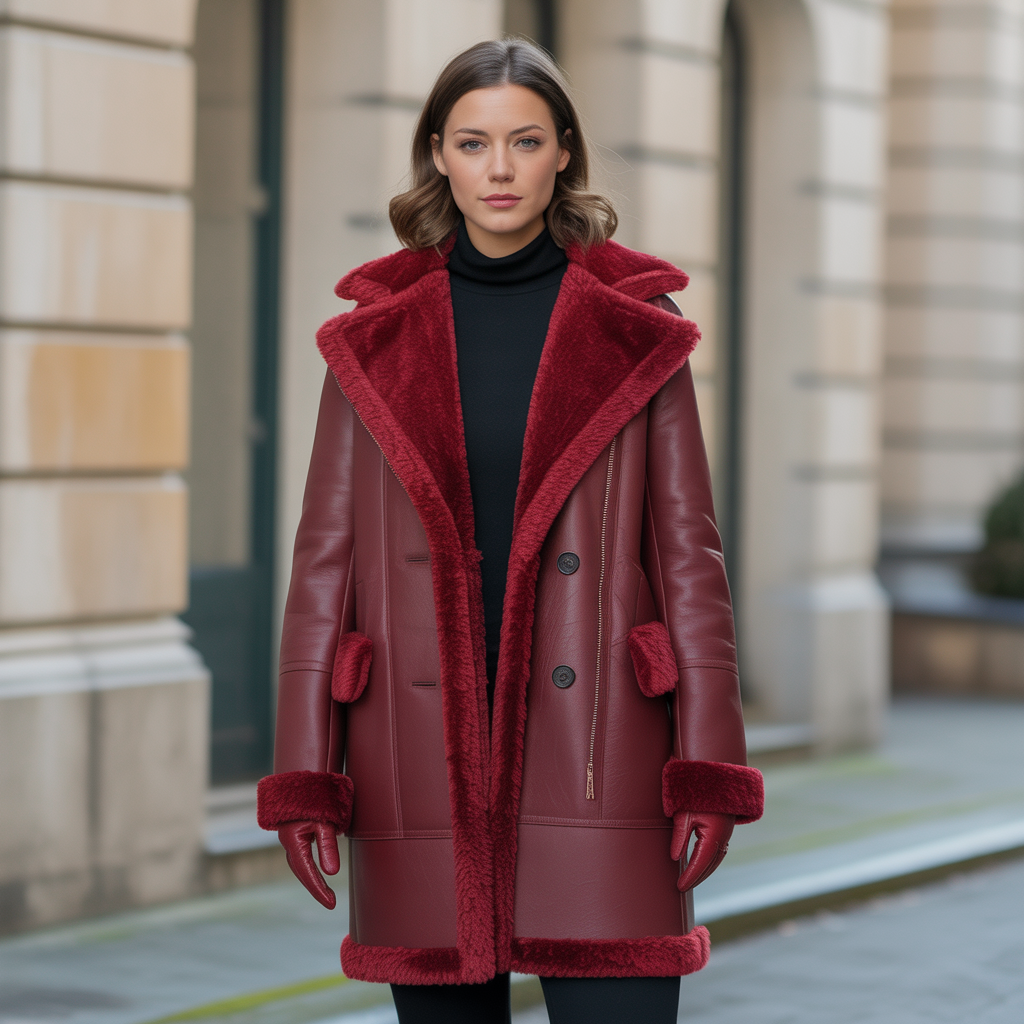
Commit to One Coat, One Story, and your investment outerwear delivers maximum impact every time—clean, confident, and effortless.